
Centerline Buffers
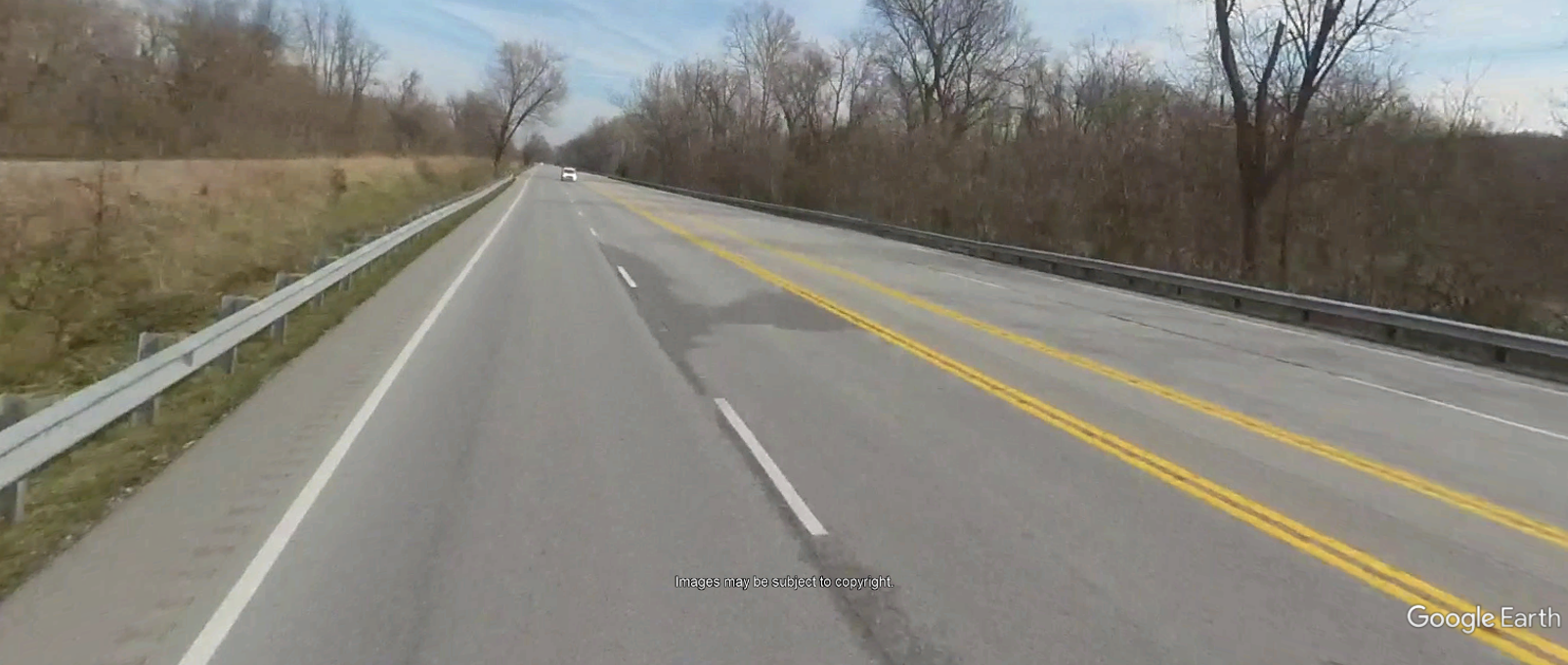
Image Source: Google Earth. US 31W, West Point, KY
DEFINITION AND DESCRIPTION
Centerline buffer areas establish additional space between two solid centerline markings, further separating opposing directions of traffic on undivided roadways. They provide space for an errant vehicle to recover if it veers toward the wrong lane and reduce head-on crashes.
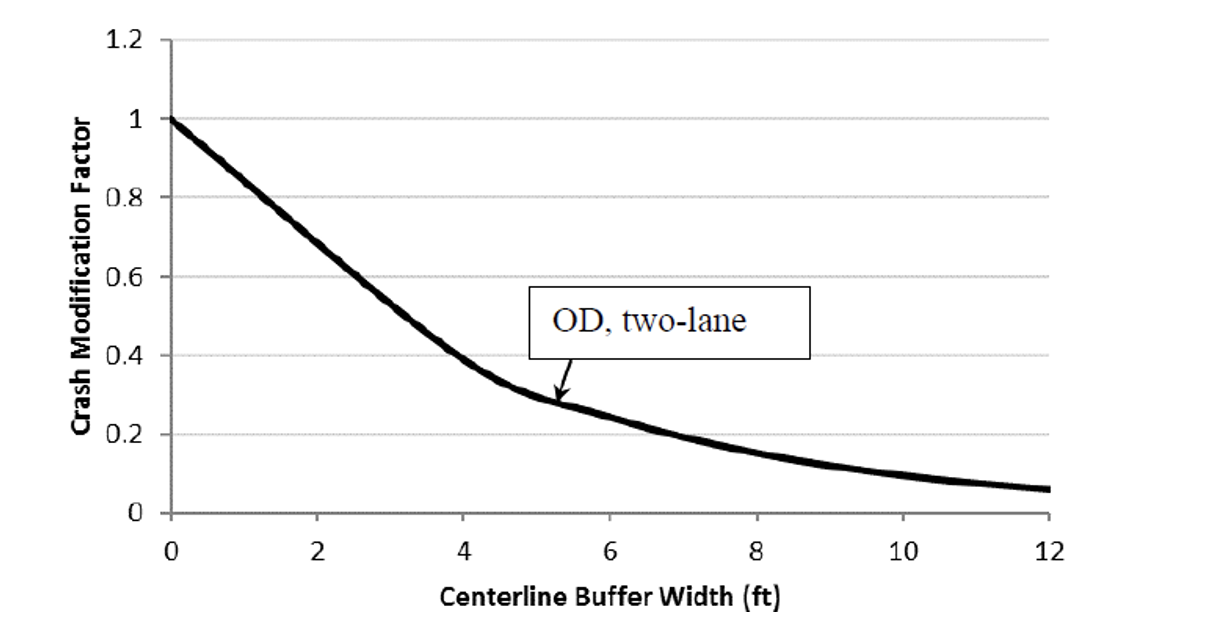
Image Source: Dixon, et.al.,2022
Implementation Categories
| Area(s) | Design & Geometrics, HSIP, Operations & Maintenance |
| Safety Category | 1, 2 |

CONSIDERATIONS
- A buffer width of 4 feet is recommended, with an acceptable range from a minimum of 2 feet to a maximum of 6 feet.
- Rumble strip and raised pavement marker application varies.
- Clarity on the application of pavement markings may be needed, especially in passing zones.
- Maintain adequate lane and shoulder widths.
- When restriping existing roadways, evaluate the shoulder’s pavement structure if it will be used as travel lanes.
- When trenching the existing shoulder to create a full-depth section, a minimum width of 4 feet is recommended to ensure proper compaction.
- Included as an engineering strategy in KYTC’s SHSP.
APPLICATION
- Can be used on high-speed, two-lane facilities.
- May be included in new or reconstruction projects or implemented through roadway reconfigurations.
example
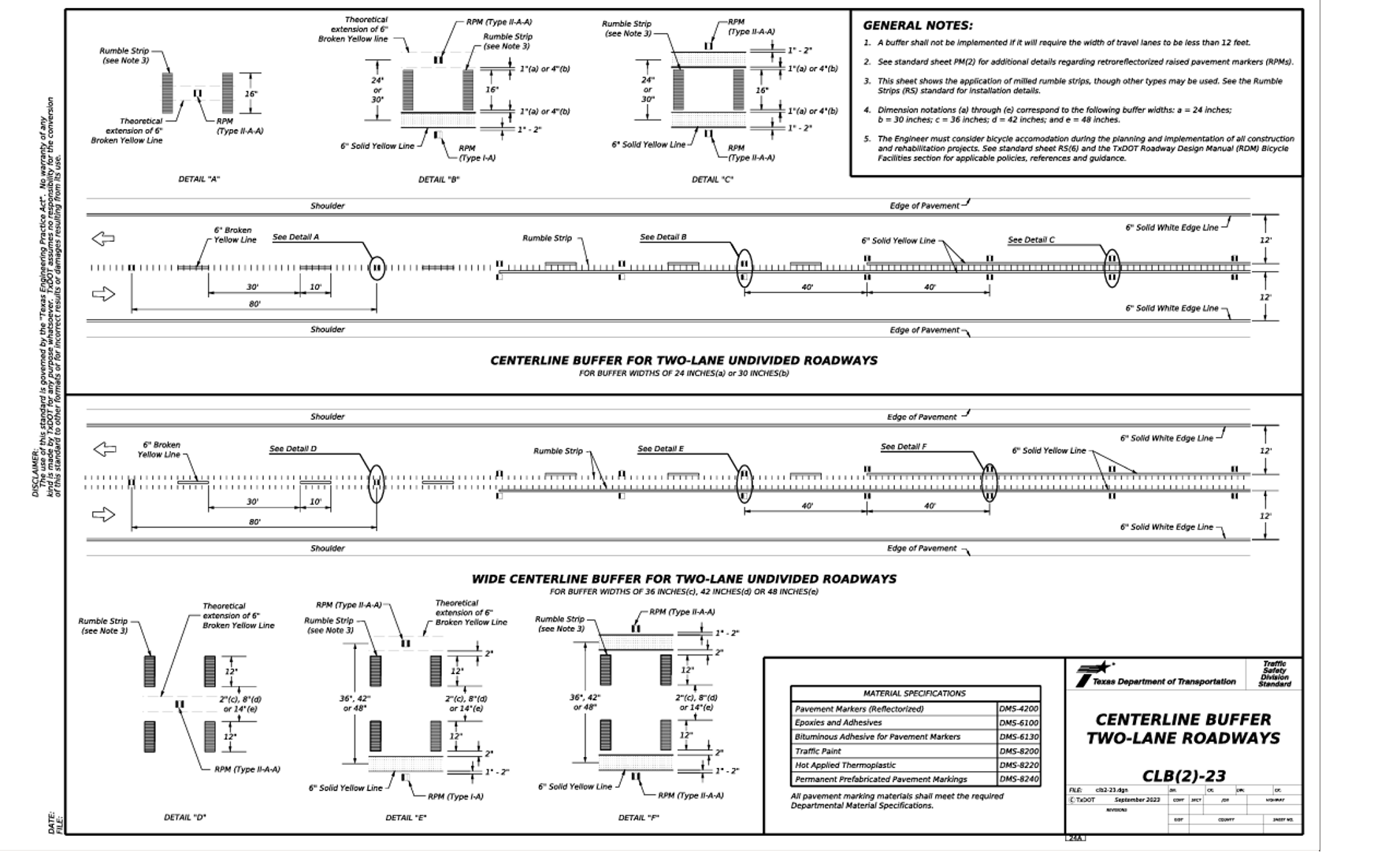
Image Source: Texas DOT
Complimentary Countermeasures
- Roadway Narrowing – Pavement Markings
- Evaluate and Implement Roadway Reconfiguration
REFERENCES AND RESOURCES
Dixon, K., E. Park, S. Geedipally, R. Srinivasan, B. Lan, C. Zegeer, S. Das, E. Rista. NCHRP Report 995: Guidelines for Treatments to Mitigate Opposite Direction Crashes. 2022. Transportation Research Board of the National Academies, Washington, DC: The National Academies Press. https://doi.org/10.17226/26586.
FHWA. Rural Roadway Departure Countermeasure Pocket Guide. https://safety.fhwa.dot.gov/FoRRRwD/RwDPocketGuide.pdf
FHWA. Safe System Roadway Design Hierarchy. 2024. FHWA-SA-22-069. https://highways.dot.gov/sites/fhwa.dot.gov/files/2024-01/Safe_System_Roadway_Design_Hierarchy.pdf
FHWA. Rumble Strips and Rumble Stripes. https://safety.fhwa.dot.gov/roadway_dept/pavement/rumble_strips/fhwasa16115/ch6.cfm
CONTACT:
Chris VanDyke
Research Scientist | Program Manager
chrisvandyke@uky.edu