
Median and Pedestrian Refuge Islands
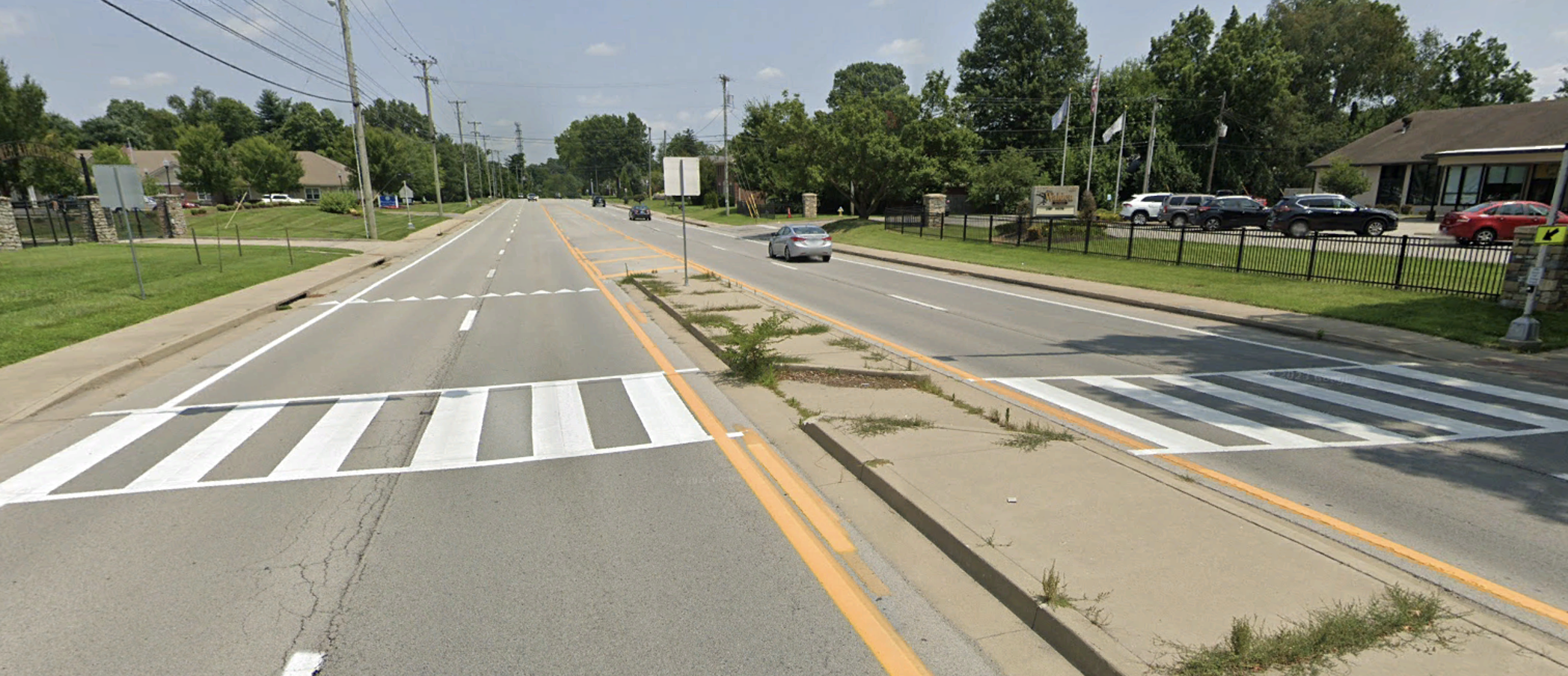
Image Source: Google Earth, Westport Road, Louisville, KY
DEFINITION AND DESCRIPTION
A median is the area between opposing lanes of traffic, excluding turn lanes. Medians in urban and suburban areas can be defined using pavement markings, raised medians, or islands to separate motorized and non-motorized road users. A pedestrian refuge island (or crossing area) is a median with a refuge area that is intended to help protect pedestrians who are crossing a road. Pedestrian refuge islands allow pedestrians to focus on one direction of travel at a time and provide a space in which to wait if they cannot traverse the entire roadway width at a signalized intersection during a single walk interval.
Implementation Categories
| Area(s) | Design & Geometrics |
| Safety Category | 1, 2 |
CONSIDERATIONS
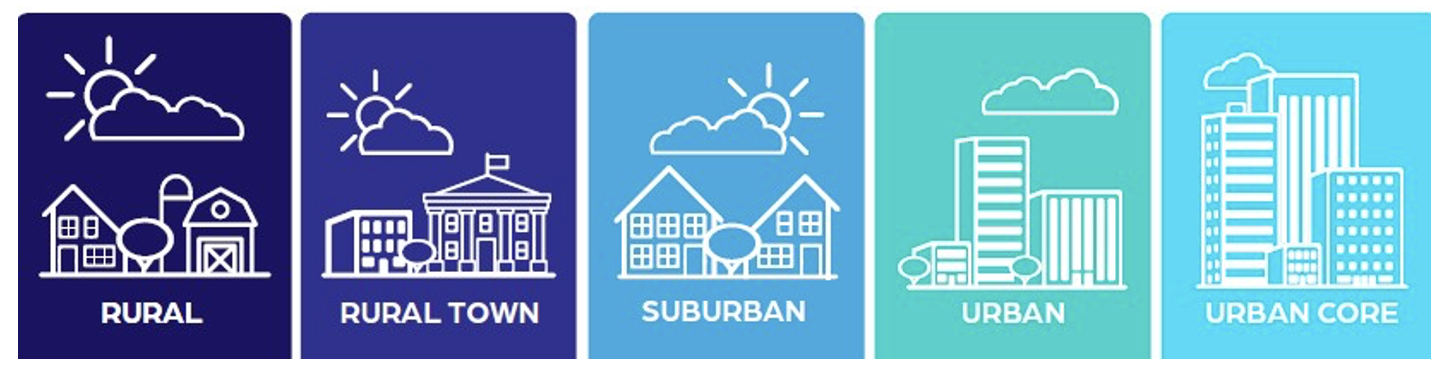
- Are an option on curbed sections of urban and suburban multilane roadways, particularly in areas with a significant mix of pedestrians and vehicle traffic, volumes over 9,000 vehicles/day, and speeds ≥ 35 mph.
- A pedestrian refuge should be at least 5 feet wide (8 feet preferred) and meet PROWAG
- Locations that may benefit from medians or pedestrian refuge islands include mid-block crossings, approaches to multi-lane intersections, and roundabout splitter islands.
- Medians provide a space to install improved lighting and supplemental traffic control devices (e.g., Rectangular Rapid Flashing Beacon [RRFB]).
- Medians of two-way left turn lanes (TWLTLs) may be hardscaped at mid-block crossings to include a pedestrian refuge.
- Existing raised medians that extend to the intersection may need “cut ins” to accommodate pedestrians.
- KYTC Standard Drawings RPM-001 through RPM-015 include details for raised median.
APPLICATION
- Medians may be installed where room exists to separate directions of travel and vehicle speeds need to be managed.
- Determine the need for a two-phase crossing.
- Pedestrian refuge islands may be used at mid-block crossings, roundabout splitter islands, and long, intersection crossings. They should measure at least 6 feet in the direction of the crossing (includes the width of detectible warning surfaces) and 5 feet in the width of crossing.
example

Image Source: Google Earth, Alumni Drive, Lexington, KY
Complimentary Countermeasures
- High-Visibility Crosswalks
- Lighting
- Evaluate and Implement Road Reconfigurations
REFERENCES AND RESOURCES
FHWA. Proven Safety Countermeasures. https://highways.dot.gov/safety/proven-safety-countermeasures/medians-and-pedestrian-refuge-islands-urban-and-suburban-areas
FHWA. Safety Benefits of Raised Medians and Pedestrian Refuge Areas. https://safety.fhwa.dot.gov/ped_bike/tools_solve/medians_brochure/medians_brochure.pdf
CONTACT:
Jill Asher
Research Engineer
jill.asher@uky.edu