Raised Intersections
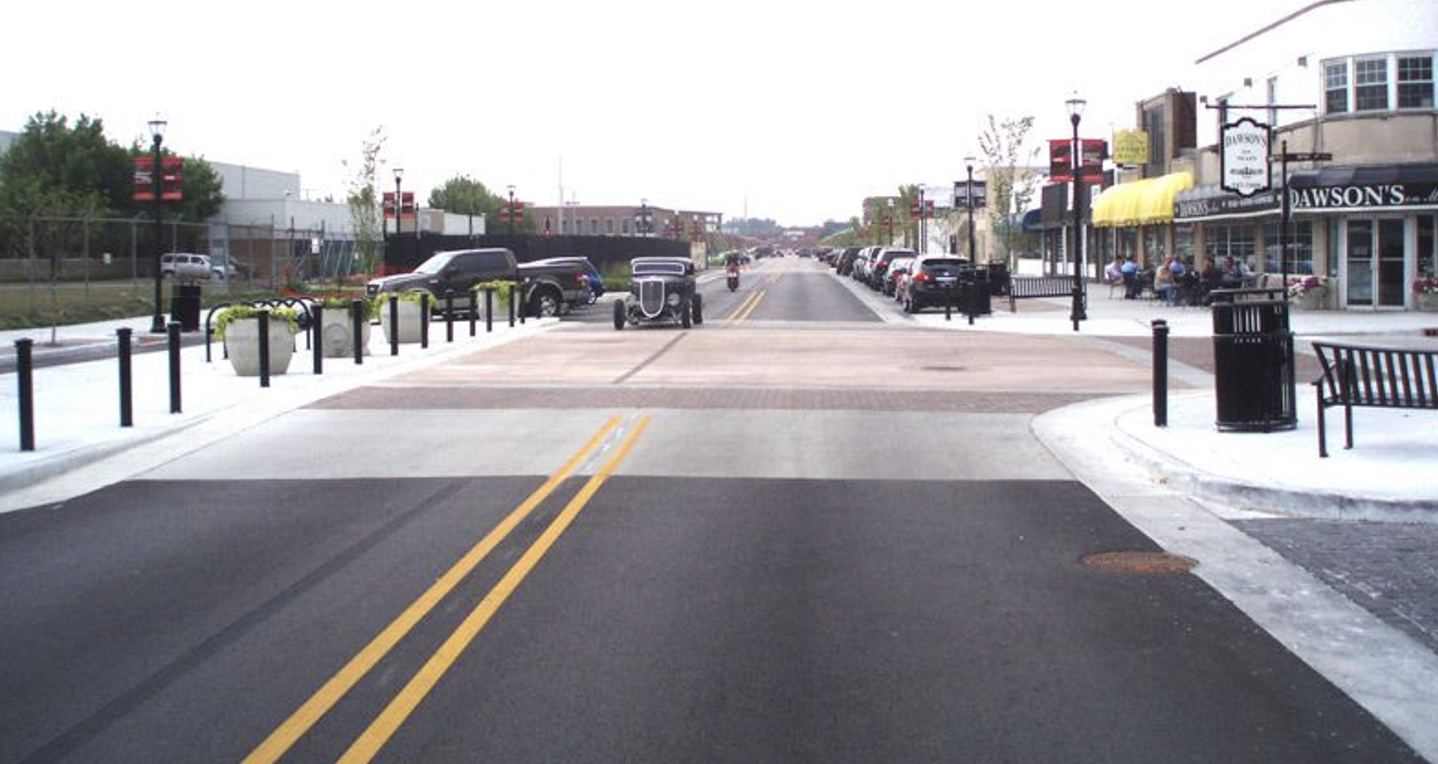
Image Source: NACTO
DEFINITION AND DESCRIPTION
A raised intersection functions like a speed table but extends across the full width of the intersection.. Ramps are installed on each approach, and the intersection elevation is flush with the sidewalk’s elevation. Raised intersections encourage motorists to slow down and yield to pedestrians.
Implementation Categories
| Area(s) | Design and Geometrics, HSIP, Operations & Maintenance |
| Safety Category | 2 |
CONSIDERATIONS
- Do not use at intersections with steep grades.
- Curb ramps must comply with PROWAG and include detectable warning surfaces for visually impaired users at crossings.
- Design to accommodate drainage.
APPLICATION
- May be considered at intersections with high pedestrian activity.
- Elevate the intersection upstream of the pedestrian crossing. The intersection is typically raised to match the sidewalk elevation, with transition slopes ranging from approximately 12:1 to 25:1.
- Install appropriate pavement markings. See Chapter 3B in the MUTCD for details.
- Add bollards to intersections corners to deter motorists from driving onto sidewalks.
example
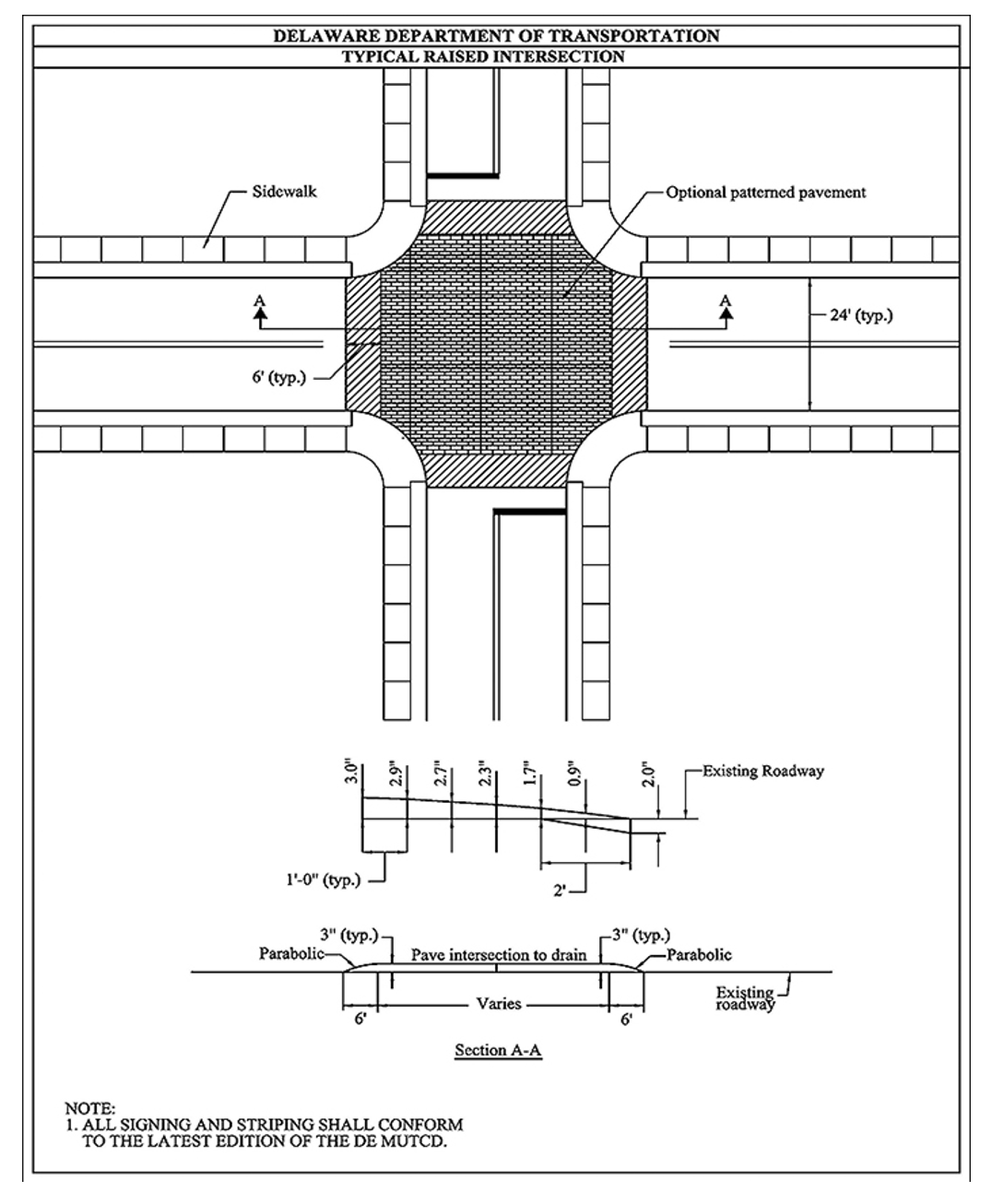
Image Source: Delaware Department of Transportation
complementary SSA Strategies
REFERENCES AND RESOURCES
(FHWA. Traffic Calming ePrimer, Module 3.15. Federal Highway Administration, U.S. Department of Transportation, Washington DC, 2023. https://highways.dot.gov/safety/speed-management/traffic-calming-eprimer
National Association of City Transportation Officials (NACTO). https://nacto.org/publication/urban-street-design-guide/intersections/minor-intersections/raised-intersections/
CONTACT:
Jill Asher
Research Engineer
jill.asher@uky.edu