
Overview
How to use the Toolbox
SSA Tools
SSA Toolbox Filter
Guidance
SSA Tools Overview
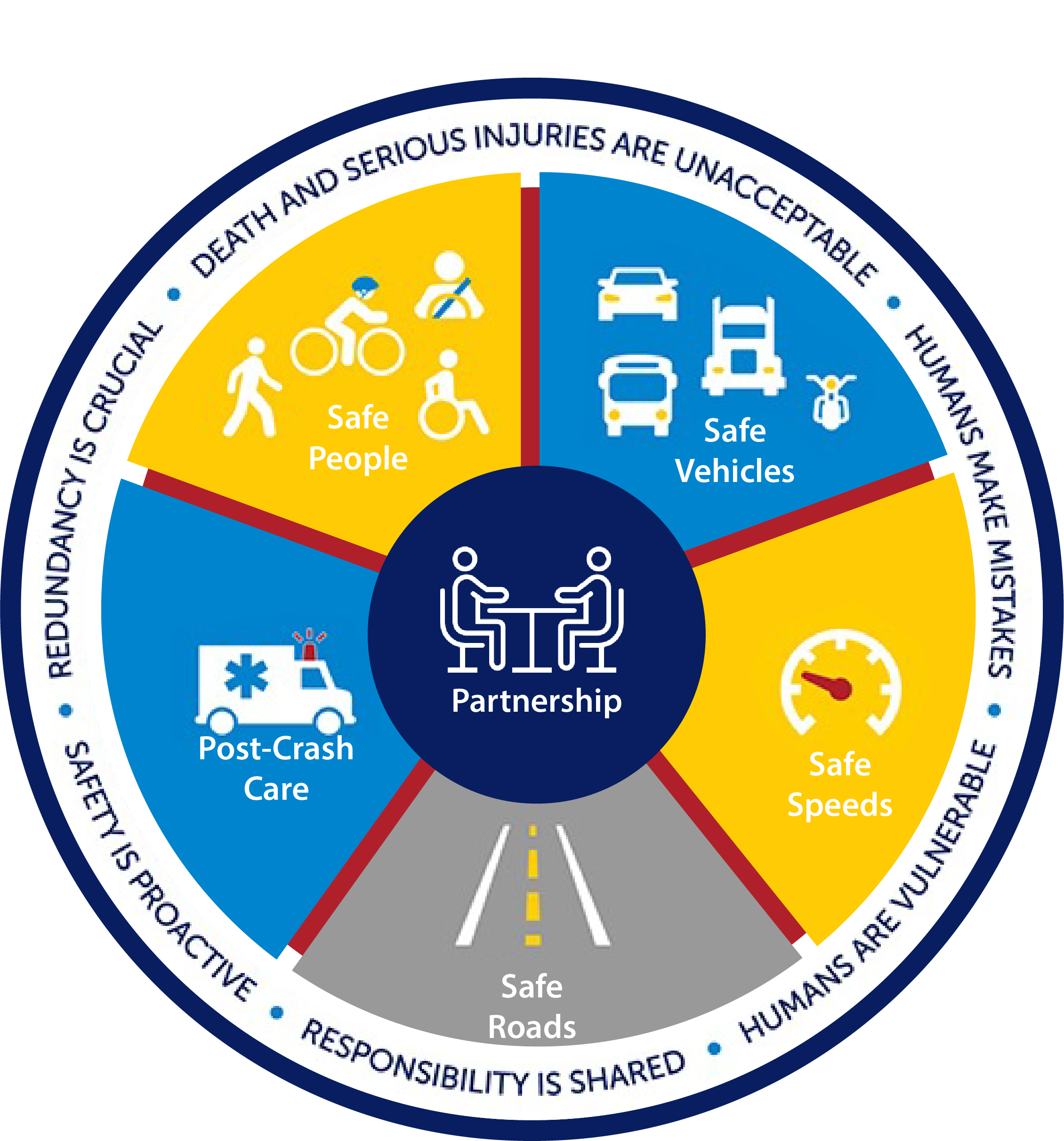
Overview
The SSA Toolbox includes a suite of SSA-aligned tools for implementation at the project or programmatic levels. Each tool has a dedicated webpage that describes its purpose and discusses implementation categories, key considerations, recommended uses, and examples. Practitioners should refer to these webpages to identify appropriate strategies for addressing roadway safety risks.
The SSA Toolbox allows users to filter strategies by multiple attributes so they can identify those which are the best fit for their project. The four filters are:
- Project Type — New or Reconstruction, Construction on Existing Roadways, Resurfacing
- Focus Area — Speed Management, Intersection, Pedestrian/Bicycle, Roadway Departure
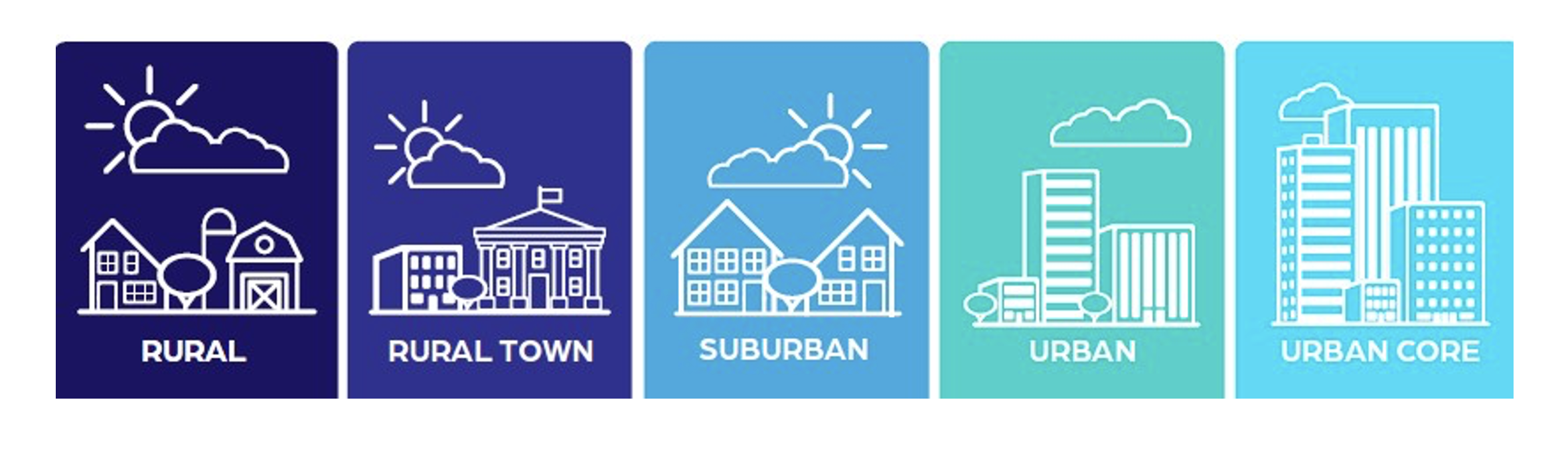
- Context Classification — Rural, Rural Town, Suburban, Urban, Urban Core
- Safety Category — Remove Severe Conflicts, Reduce Vehicle Speeds, Manage Conflicts in Time, Increase Awareness
Roadway Context Classification
Roadway context is defined based on factors such as level of development, building densities and setbacks, multimodal user patterns and requirements, network permeability, and speed. Not every tool is suitable for all contexts. The webpage for each tool indicates contexts in which it can be applied using the graphic below. If a context is grayed out, the tool is less likely to be applicable in that context.
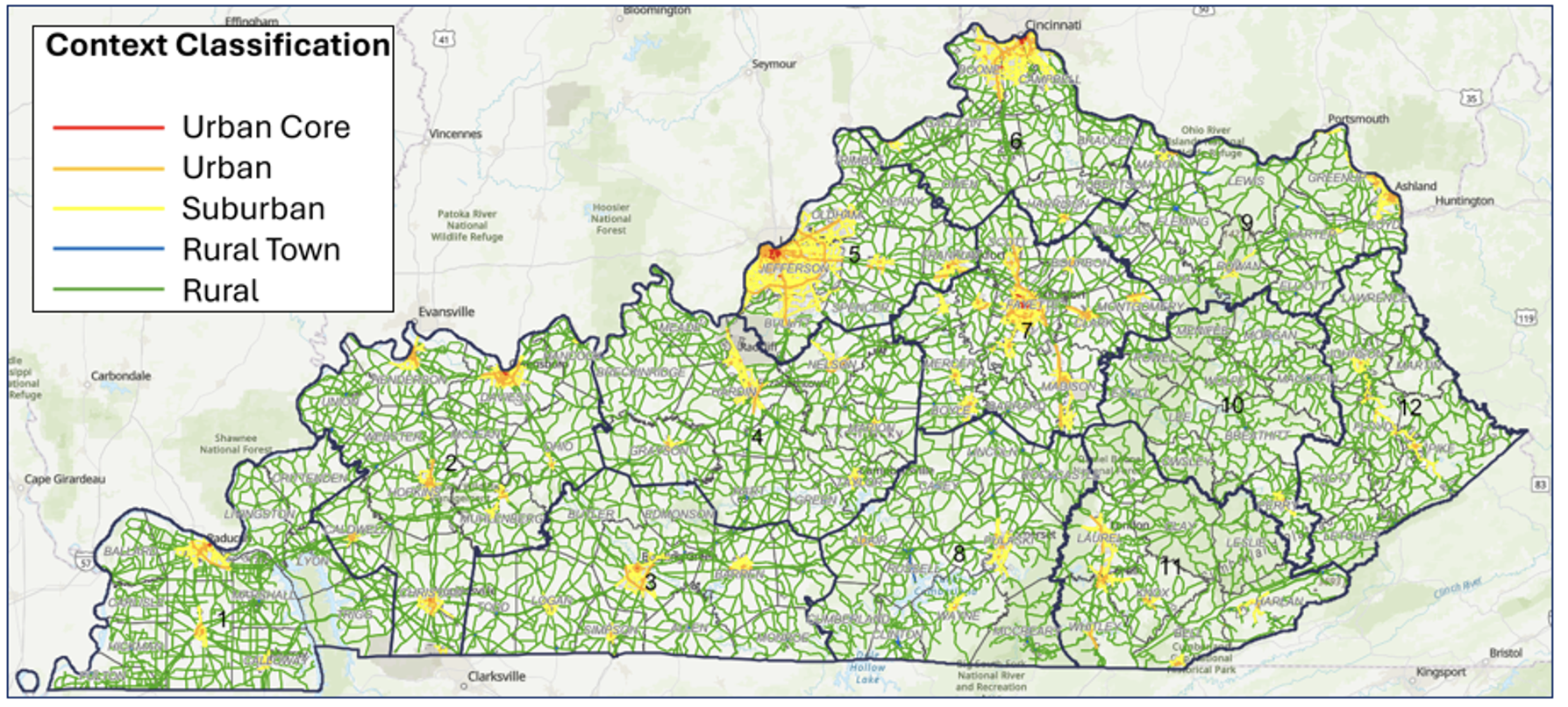
At the project level, the roadway context is selected by the project team. For systemic or programmatic applications, KYTC’s Context Classification Network (coming soon) may be used.
Safety Category
Each SSA tool addresses one or more of the safety categories listed below. These categories were adapted from FHWA’s publication Safe System Roadway Design Hierarchy (2024). Strategies in Safety Category 1 receive the highest priority. However, the most effective approach is to implement countermeasures from multiple tiers to create overlapping, redundant layers of safety. A single SSA Tool may align with multiple Safety Categories.
- Safety Category 1: Remove Severe Conflicts
- Safety Category 2: Reduce Vehicle Speeds
- Safety Category 3: Manage Conflicts in Time
- Safety Category 4: Increase Awareness

Implementation Categories
The toolbox primarily includes tools that can be implemented within KYTC’s Department of Highways. Effective SSA implementation relies on collaboration and shared responsibility among multiple KYTC work areas. Execution should align with relevant implementation areas. Most strategies involve more than one of the implementation areas or phases listed below:
- Statewide*
- Planning
- Design & Geometrics
- HSIP
- Traffic Operations
- Permits
- Operations & Maintenance
- Construction
*Statewide means the strategy is implemented programmatically across the Department of Highways or directed through the State Highway Engineer’s Office.
For more information, see the SSA Tools Knowledge Book (coming soon) in the Highway Knowledge Portal (HKP).
CONTACT:
Jill Asher
Research Engineer
jill.asher@uky.edu